

Learn about 15 applications of industrial robots.
20-03-2026 11
The application of robots in industry has become a key factor in helping businesses optimize productivity, improve quality, and reduce operating costs in the era of smart manufacturing.
From assembly lines, packaging, welding, and painting to product sorting, robots deliver superior efficiency compared to traditional manual methods.
Join Intech Robotics as we explore 15 outstanding applications of industrial robots in the article below:
What is an Industrial Robot?
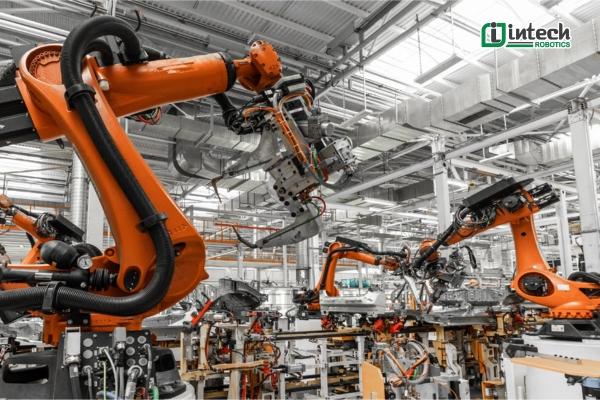
An industrial robot is a pre-programmed mechatronic device designed to automatically perform manufacturing tasks ranging from assembly, welding, and painting to packaging and material handling. It is a flexible automation solution that can be easily adjusted and reprogrammed to suit various factory tasks.
With the ability to operate accurately, stably, and continuously, industrial robots enhance productivity, ensure product quality, and reduce labor costs. A typical industrial robot system consists of five main components: a central controller, sensors, a motion controller, end-effectors, and a drive system.
Top 15 Industrial Applications of Robots
Current industrial robot applications help businesses optimize processes, reduce costs, and achieve breakthrough productivity. Here are the 15 most popular and effective applications of industrial robots in modern factories:
Assembly
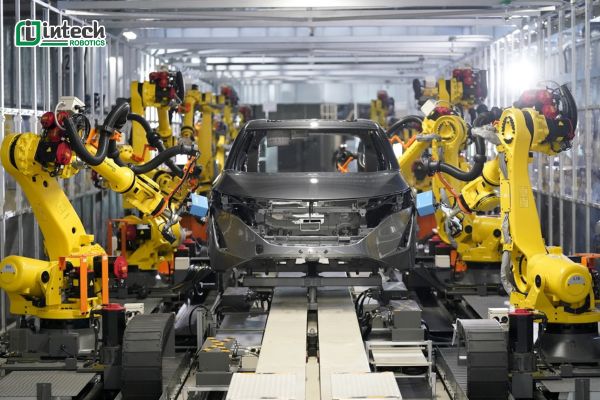
Industrial robots are extensively applied in assembly lines for mechanical parts, electronics, and automotive components. Utilizing advanced control and computer vision technology, robots can handle high-precision tasks such as screwdriving, adhesive dispensing, or joining small components.
Material Handling and Picking
In logistics and warehousing, picking & handling robots automate processes like sorting, moving, or unloading goods. The emergence of AGVs (Automated Guided Vehicles) and AMRs (Autonomous Mobile Robots) has revolutionized smart warehouses, providing flexible transportation, obstacle avoidance, and path optimization to improve operational efficiency and reduce manual dependency.
Lightweight Robot Arms with Robot Vision
A prominent modern application is integrating robot vision into lightweight industrial arms. Equipped with laser sensors and smart camera systems, these robots can analyze their environment and provide real-time feedback.
This allows for high precision in complex tasks such as windshield installation, small component mounting, defect inspection, or operating in confined spaces.
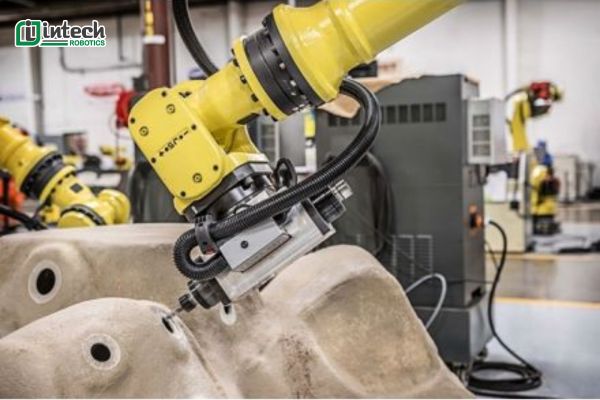
Collaborative Robots (Cobots)
Collaborative robots, or Cobots, represent a new generation of robots with compact structures, lightweight designs, and easy programming. Cobots are widely used in small and medium-sized enterprises (SMEs) for component transfer, packaging, assembly, product inspection, and palletizing.
Cobots not only increase productivity and reduce labor costs but also offer businesses flexibility in line layout, particularly in frequently changing stages. This is a key trend in smart automation for modern factories.
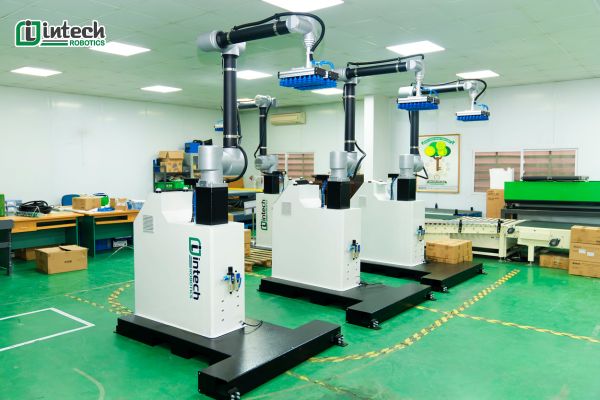
Pick and Place Robots
These robots pick up products from one location and place them in another with high speed and precision, shortening production cycle times and minimizing human error. They are typically used for highly repetitive products and processes, such as sorting electronic components, placing mechanical parts into trays, or transferring products from conveyors to containers.
With specialized End of Arm Tooling (EoAT) or grippers designed for specific products, robots can handle small, lightweight, and fixed-size objects, ensuring stable and accurate performance in every movement.
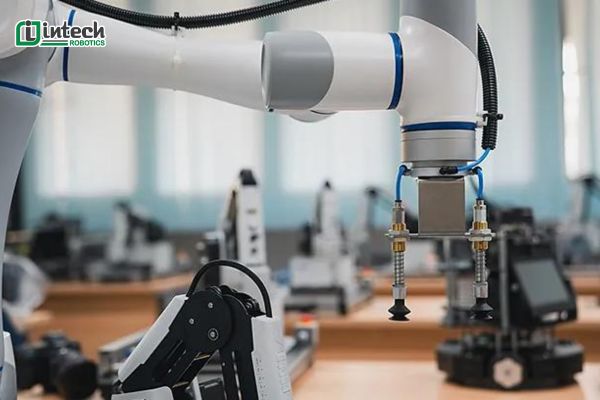
Picking Robots
By applying Artificial Intelligence (AI) and computer vision, these robots can identify products, locate them precisely, and perform pick-and-place operations automatically within diverse and complex cargo environments.
Picking robots speed up order processing, reduce errors, and maintain 24/7 operations, meeting the rapid delivery demands of the modern market while optimizing supply chains and inventory management.
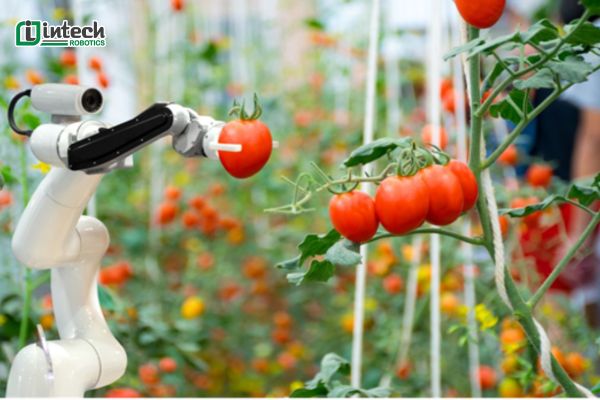
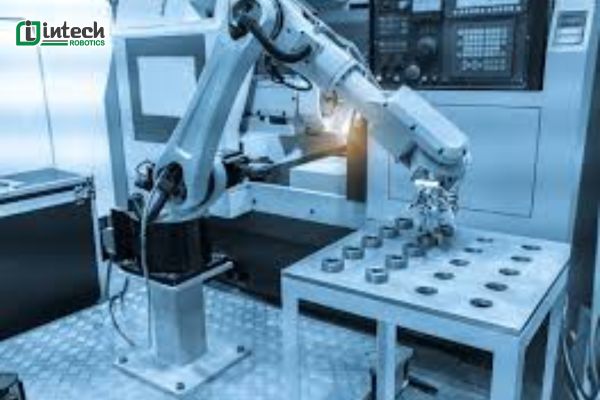
Machining and Cutting Robots
Automating machining and material cutting is a critical industrial application. In mechanical plants, using robots ensures high accuracy, increases processing speed, and reduces the risk of workplace accidents.
Common robots in this category include:
-
Machine Tending Robots: Handle workpiece feeding, loading parts into CNC machines, and unloading finished products.
-
Milling Robots: Used for cutting and shaping products with high precision, especially effective when combined with CNC technology.
-
Drilling Robots: Provide superior stability, accuracy, and productivity compared to manual drilling.
-
Laser, Plasma, and Waterjet Cutting Robots: Deliver fast, smooth cuts without deformation, suitable for various metals and non-metallic materials.
Welding Robots
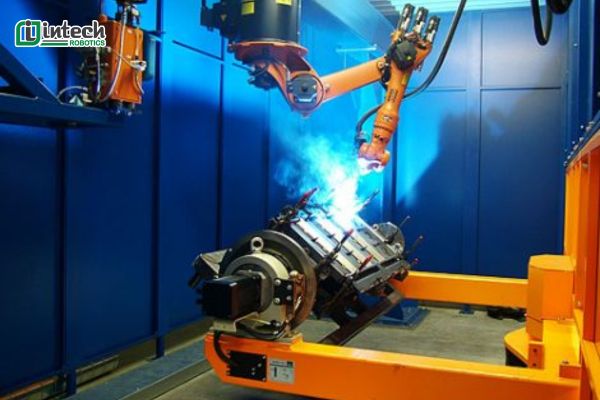
Welding is one of the most common applications of industrial robots, particularly in automotive, mechanical engineering, and metal fabrication lines.
Common types of welding robots include:
- Arc Welding Robots: Use electric current to melt and join metals, creating durable, airtight welds for structural steel, pipes, aluminum, and alloys.
-
Spot Welding Robots: Use electrodes to clamp and pass current through thin metal sheets to join them. This is ideal for automotive body assembly lines due to its speed and efficiency.
-
MIG and Laser Welding Robots: Offer high precision and minimal spatter, suitable for applications requiring refined weld finishes.
Finishing and Sanding Robots
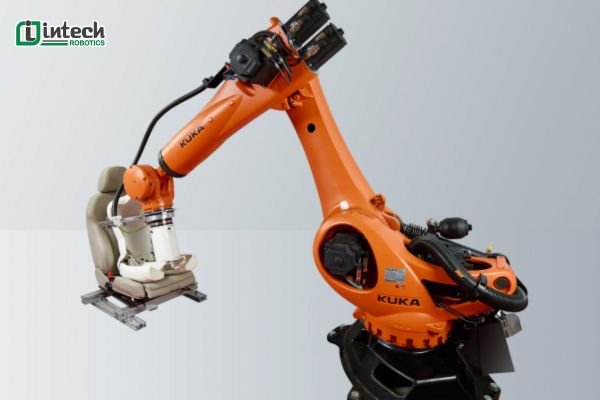
Many manufacturing stages like casting, drilling, or welding leave burrs, sharp edges, or rough surfaces that require processing before finalization.
With precise repeatability and stable control of grinding force and contact angles, robots handle tasks like grinding, polishing, painting, coating, or smoothing materials with consistent quality across automotive, aerospace, and electronics sectors.
Cleaning and Sanitation Robots
In modern factories, maintaining a clean environment ensures productivity and directly impacts product quality and worker safety.
These include floor scrubbers, vacuum robots, disinfection robots, and surface cleaning robots, programmed to navigate automatically, detect dirty areas, and clean efficiently. They are especially useful in the food, medical, and pharmaceutical industries.
Logistics and Storage Robots
-
Warehouse Robots: Including AGVs and AMRs, they transport goods flexibly and safely between warehouse zones, significantly reducing manual travel time.
-
Delivery Robots: Used both inside and outside factories, these can take various forms such as autonomous carts, bipedal robots, or Unmanned Aerial Vehicles (UAVs).
Packaging and Palletizing Robots
Palletizing robots fully automate product preparation, from sorting and wrapping to sealing and stacking crates based on order requirements. In food, pharmaceutical, or e-commerce industries, they are programmed to handle fragile or perishable items gently.
With AI support, robots can determine the size and weight of each crate and automatically arrange them so that heavy boxes are at the bottom, ensuring safety and stability during transit.
Agricultural Harvesting Robots
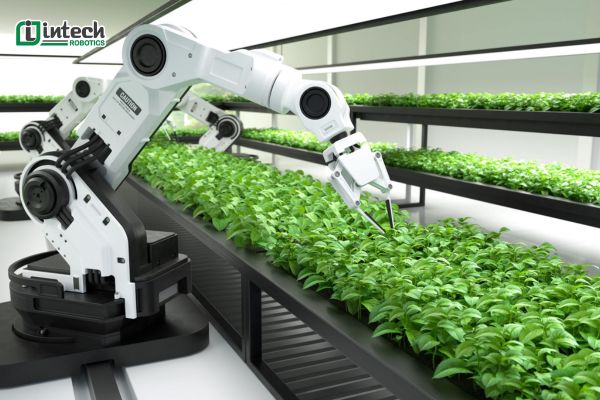
Harvesting robots equipped with soft grippers and smart vision systems identify the ripeness of fruits and vegetables and perform picking operations gently without damaging the produce. These robots can work continuously, even in harsh weather, reducing labor costs and crop loss while increasing harvesting efficiency.
Robots for Hazardous Environments
Heat-resistant, dust-proof, chemical-resistant, or radiation-resistant robots are specifically designed to replace humans in extreme conditions.
They are common in mining, metallurgy, chemical production, nuclear energy, or toxic waste handling. Robots handle welding, painting, heavy material transport, monitoring, and equipment maintenance without risking human health.
Advances in AI, sensors, and remote control allow these robots to react flexibly, ensuring workplace safety while maintaining high productivity in specialized manufacturing environments.
Conclusion
Industrial robot applications are expanding and becoming the core foundation for digital transformation in modern manufacturing. With the rapid development of AI, machine vision, smart sensors, and Collaborative Robots (Cobots), robots are no longer just tools but "smart assistants" working alongside humans across all production lines.
Intech Group is proud to be a provider with nearly 15 years of experience in supplying and integrating industrial robot solutions, conveyors, and autonomous vehicles (AGV, AMR). We offer businesses comprehensive automation solutions to elevate production efficiency and keep pace with Smart Factory 4.0 trends.
