

MES and Industrial Robotics Enhance Automation and Production Efficiency
09-04-2026 14
Sự tích hợp giữa MES (Hệ thống Điều hành Sản xuất) và Robot/Cobots không chỉ là một bước tiến công nghệ, mà là giải pháp đột phá kiến tạo hệ sinh thái sản xuất Tự động hóa – Linh hoạt – Hiệu quả.
1. Definition: What are Robots and Manufacturing Execution Systems (MES)?
What is Robotics?
Robotics is not merely about building machinery; it is a high-level intersection of mechanical engineering, electronics, and computer science. This field focuses on the research, design, and operation of automation systems aimed at optimizing human performance through intelligent machines.
In short: Robots are autonomous mechanical systems programmed to perform specific tasks with absolute precision, superior speed, and minimal direct human intervention. For over half a century, robots have evolved from single-task machines into the core "pillars" of global innovation and digital transformation.
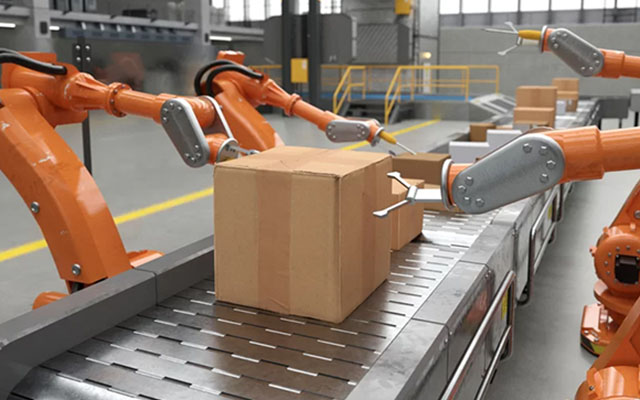
Robotic arm packing cartons in a smart factory line
What is a Manufacturing Execution System (MES)?
MES (Manufacturing Execution System) is a comprehensive production management system that serves as the "control center" for real-time data flow at the shop floor level. In enterprise automation architecture, MES is the strategic link connecting Enterprise Resource Planning (ERP) systems at the management level with direct execution devices such as CNC machines, Robots, or PLCs at the production level.
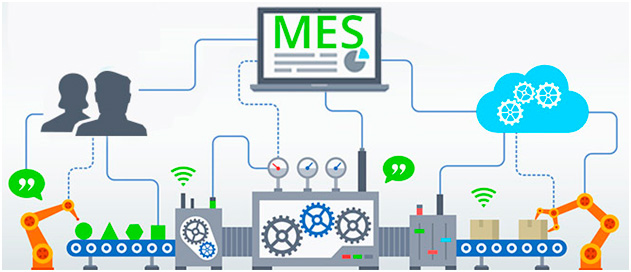
Manufacturing Execution System (MES)
The presence of MES allows for the conversion of strategic plans from the office into detailed production orders, ensuring seamless and transparent communication between management teams and direct operational activities.
2. History and Foundational Milestones
The term "Robot" originates from the Czech language, first appearing in 1920 in Karel Čapek's play "Rossum's Universal Robots." However, it wasn't until the 1940s that the concept of "Robotics" was officially coined by science fiction writer Isaac Asimov.
The Three Laws of Robotics – core ethical principles that still serve as a reference in modern Artificial Intelligence (AI) research:
-
Human Protection: A robot may not injure a human being or, through inaction, allow a human being to come to harm.
-
Obedience: A robot must obey orders given to it by human beings, except where such orders would conflict with the First Law.
-
Self-preservation: A robot must protect its own existence as long as such protection does not conflict with the First or Second Law.
Breakthrough Milestones:
-
1961: The world's first industrial robot was born, undertaking the harsh task of handling hot metal on an automotive assembly line, ushering in the era of production automation.
-
1966: The first mobile robot was developed by the Stanford Research Institute. "Shakey" possessed the ability to perceive and react to its surroundings, laying the early foundation for the combination of Computer Vision and Artificial Intelligence.
Why should businesses choose Robot solutions from Intech?
With extensive experience in automation, Intech Group inherits technological excellence from global robotics history to develop optimized product lines for the Vietnamese market. We provide:
-
Custom AI integration solutions based on the specific requirements of each factory.
The intersection of Manufacturing Execution Systems (MES) and industrial Robot/Cobot technology is redefining the standards of modern production. In the Industry 4.0 era, operating independent entities is no longer enough to maintain a competitive advantage. Instead, deep integration between the "Operating Brain" (MES) and the "Executing Arm" (Robot) is the key to realizing the Smart Factory model.
3. The Essence of Symbiosis: MES & Robotics
To optimize the value chain, businesses need to clearly define the strategic role of each component in the system:
-
MES (Manufacturing Execution System): Acts as the real-time data coordination center, providing comprehensive monitoring of the production path from raw materials to finished products. It handles core tasks such as dynamic scheduling, Quality Management, and Overall Equipment Effectiveness (OEE) analysis.
-
Industrial Robots: Operate with absolute speed and precision in isolated environments.
-
Cobots: A generation of collaborative robots designed to interact safely with humans. Cobots are flexible in sophisticated assembly stages, visual inspection, or logistics support in shared workspaces.
4. Strategic Benefits of Integrating MES and Robots/Cobots
This combination creates an intelligent hierarchical control architecture, bringing four core surplus values to the business:
-
Optimization of Performance and Productivity (OEE)
MES provides production orders and technical specifications directly to the Robot. Conversely, the Robot feeds real-time operational data back to the system. This closed-loop cycle eliminates "downtime," optimizes production rhythm, and ensures uninterrupted material flow.
-
Absolute Quality Control
Robot consistency combined with the error-threshold monitoring capability of MES helps minimize defect rates. Every parameter in the production process is stored, creating transparent traceability for each product.
-
Flexible Market Response
In the context of diverse product varieties, MES allows for instantaneous changes in production order configurations. Robots and Cobots can quickly switch protocols to adapt to new product lines without complex hardware intervention.
-
Optimization of Resources and Costs
Integrating Robots helps free labor from hazardous tasks, allowing personnel to focus on high-value-added creative and management stages. This not only reduces direct labor costs but also creates a safe, sustainable working environment.
5. Comparison Table: Process Optimization with MES and Robotics
| Stage | Role of Robots/Cobots | Role of MES | Practical Benefit |
| Assembly | Handling micro-components, precise assembly. | Providing BOM (Bill of Materials) & SOP (Standard Operating Procedure). | Increasing accuracy, eliminating assembly errors. |
| Quality Control (QC) | 2D/3D Vision scanning, measurement sensors. | Analyzing data from sensors, making defect rejection decisions. | Reducing Not-Good (NG) product rates, protecting brand reputation. |
| Packaging | Palletizing Robots for high-speed goods arrangement. | Coordinating orders, managing Serial/Batch codes for packaging. | Optimizing logistics and warehouse space. |
6. Practical Applications by Industry
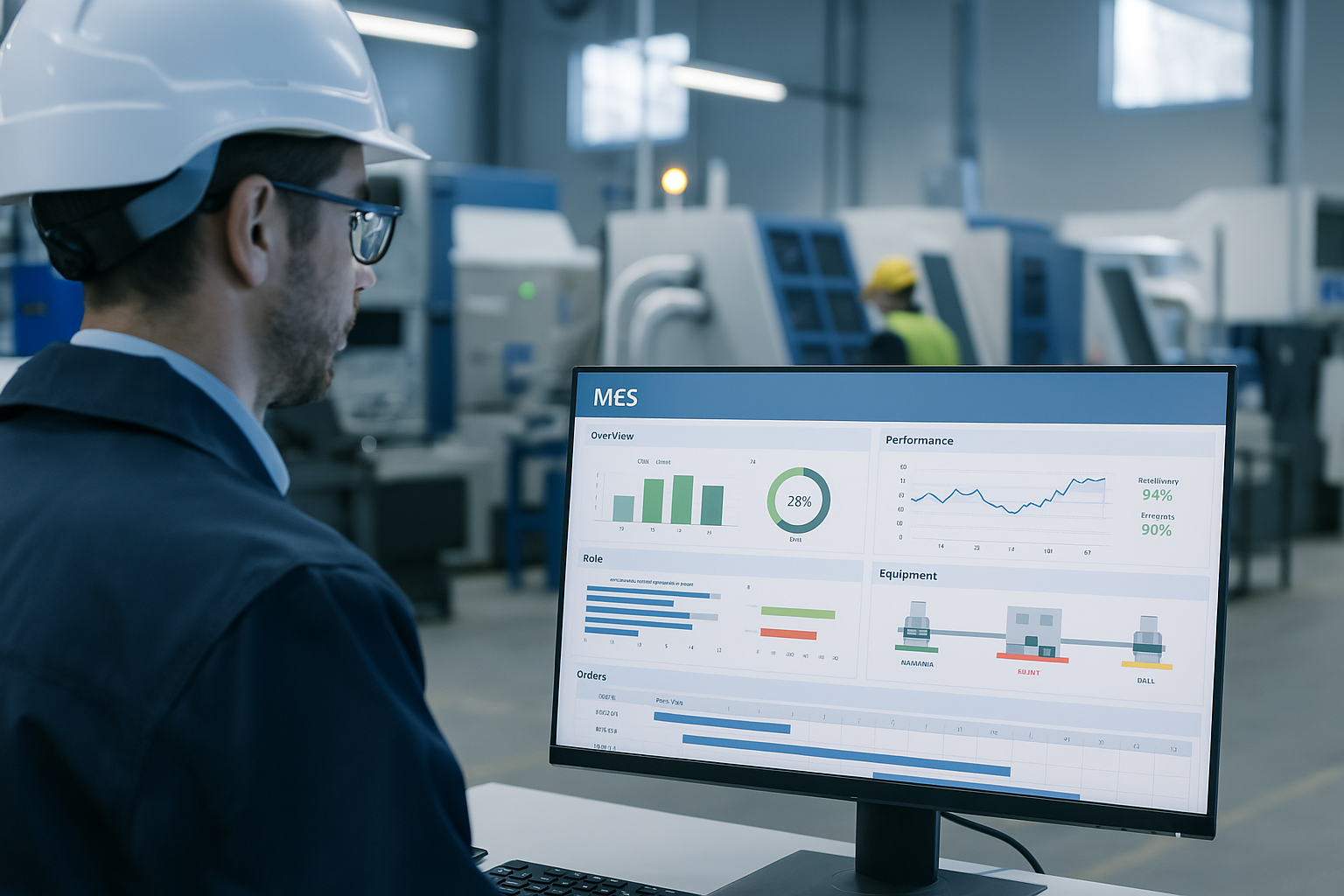
Application of MES software in production plants
-
Automotive Industry: MES coordinates welding and painting robots according to specific car models on the same line, ensuring the highest level of personalization.
-
Electrical & Electronics: Cobots support PCB assembly under strict technical parameter supervision from MES to ensure ESD standards and micro-precision.
-
FMCG & Food: AGV systems integrated with MES help transport materials automatically, ensuring hygiene safety standards and optimizing the cold supply chain.
7. Implementation Roadmap and Overcoming Challenges
The transition to an MES-Robot system requires a methodical investment strategy to overcome cost and technical barriers:
- Integration Challenges: Legacy equipment is often difficult to connect.
Solution: Use platforms with open APIs and industrial communication standards (OPC UA, MQTT) to synchronize data.
- Human Resources: Shortage of experts who understand both hardware (Robots) and software (MES).
Solution: Partner with reputable general contractors like Intech Robotics for "Turnkey" solution consulting and technology transfer training.
- Investment Costs
The fusion of MES and Robots/Cobots is no longer a future trend but has become a mandatory standard for businesses wishing to lead in the digital era. At Intech Robotics, we provide comprehensive integrated solutions, turning data into action and turning robots into a sustainable competitive advantage for our customers.
