


The best quality light-duty handling robots of 2026.
20-03-2026 19
Lightweight material handling robots are automated industrial robots designed to perform tasks such as lifting, moving, and handling light to medium-weight items.
As we enter 2026, Artificial Intelligence (AI) is no longer confined to software or digital applications; it is manifesting powerfully in the physical world through industrial robots and intelligent automation systems. Among these, light-duty palletizing robot series are becoming prominent solutions helping businesses increase productivity, reduce operating costs, and optimize internal logistics processes.
So, what are the popular light-duty palletizing robot series available today, and which choice is best suited for your factory? Join Intech Robotics to explore the details in the article below.
What are Light-Duty Palletizing Robots?
Light-duty palletizing robots are automated industrial robots designed to perform operations such as lifting, moving, and unloading items with light to medium mass.
These robots are intelligently programmed to operate precisely and stably across various stages—from stacking cartons, sacks, and product boxes to palletizing or transferring goods between factory areas. This helps businesses minimize labor risks, optimize labor costs, and simultaneously increase productivity and safety within the production workflow.
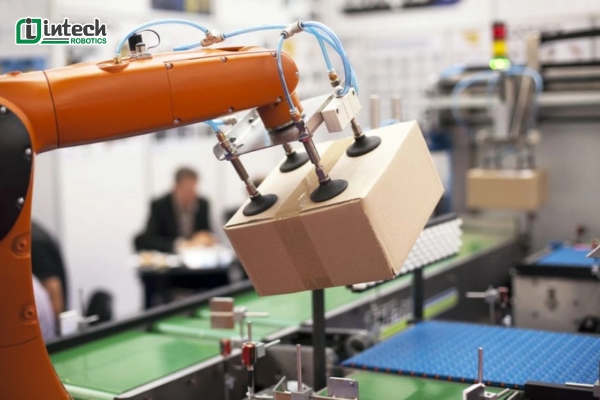
Structure of Light-Duty Palletizing Robot Series
By applying advanced robotics technology combined with Artificial Intelligence (AI) and smart sensors, these systems offer flexible, precise operation and superior efficiency. The basic structure of light-duty palletizing robot series includes the following components:
Collaborative Robot (Cobot)
Light-to-medium payload collaborative robots are designed to meet international standards for safety and performance, capable of working directly alongside humans. These robots can be easily programmed, repurposed, and flexibly integrated into various production lines to optimize operational processes.
Mobile Robot Base
The robot base is designed as a mobile module, integrated with a 7th-axis lift column to extend the working range, allowing the robot to reach more loading and unloading positions. This flexible structure helps the robot move easily in tight spaces, making it suitable for factories with limited area or frequent layout changes.
Gripper/End Effector
This is the "hand" of the robot, directly responsible for gripping, lifting, and moving goods. Robot grippers or vacuum suctions are designed to be lightweight with strong suction force to effectively prevent drops. Consequently, the robot can handle various light items such as cartons, sacks, plastic bags, or product boxes with high stability and precision.
Intelligent Control Screen
The robot system is equipped with a large capacitive touchscreen (15 inches), making it easy for operators to control and observe the entire process. The ITR software version 1.0 is optimized for fast processing speeds, intuitive operation, and stable connectivity between devices in the production line.
Electrical Control Cabinet
The electrical control cabinet is researched and developed in-house, ensuring powerful processing performance while maintaining low power consumption. It serves as the hub for coordinating all robot activities, responsible for the synchronous connection between software, sensors, and hardware.
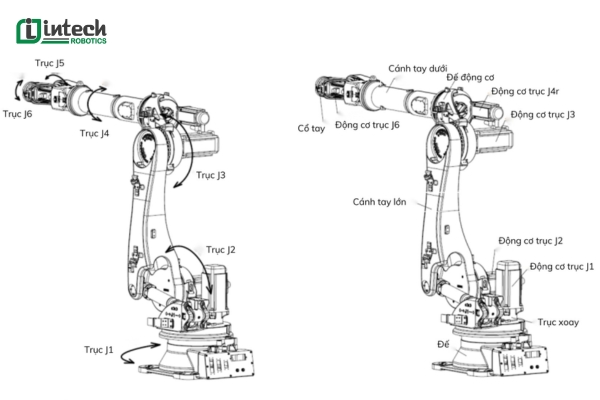
Popular Types of Light-Duty Palletizing Robots Today
As production automation and logistics continue to evolve, light-duty palletizing robot series have become vital solutions for increasing productivity, reducing costs, and ensuring operational safety. Below are the most common types of light-duty palletizing robots.
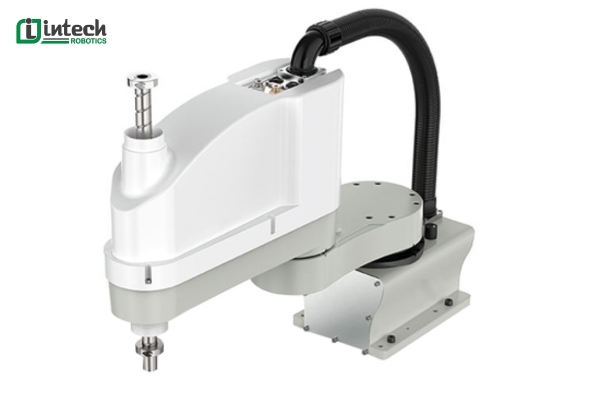
SCARA Robot
The SCARA (Selective Compliance Assembly Robot Arm) robot features a specialized arm structure flexible along the horizontal plane, allowing for fast and precise operations in confined spaces.
SCARA robots are particularly suited for applications requiring high precision, such as:
-
Handling electronic components or small mechanical parts.
-
Assembly, coating, and product quality inspection.
-
Packaging light goods on automated lines.
With high processing speed, precision, and easy integration into modern lines, the SCARA robot is an ideal choice for businesses looking to automate repetitive tasks while ensuring product quality.
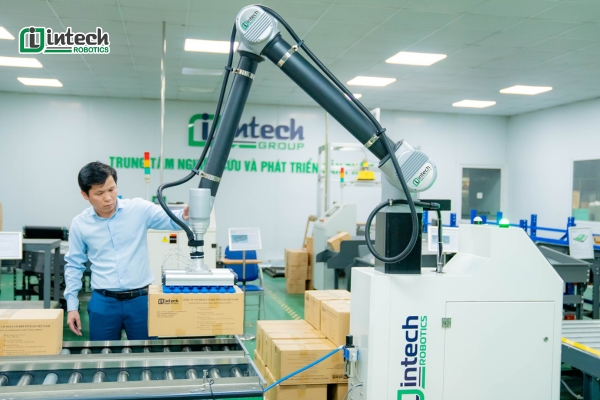
Robotic Handling Station
A robotic handling station is a fully integrated system combining an industrial robot with peripheral devices such as conveyors, sensors, control cabinets, and monitoring software.
This station operates as a closed automated line, capable of flexibly handling various light-duty goods like cartons, sacks, or boxes. Key advantages of the robotic handling station include:
-
Flexible customization based on production requirements.
-
Stable operation, minimizing handling errors.
-
Easy integration with ERP, WMS, or MES systems.
Due to its high flexibility, the robotic handling station is suitable for medium to large-scale enterprises aiming for comprehensive automation in packaging lines and internal logistics.
Delta Robot (Spider Robot)
Delta robots, often called spider robots, feature a distinctive design with three flexible arms, allowing them to operate at extremely high speeds with superior precision.
This type of robot is commonly applied in manufacturing sectors requiring fast and sophisticated movements, particularly:
-
Food and Beverage industry (packaging confectionery, bottles).
-
Pharmaceutical industry (sorting and packaging pills or vials).
-
Electronics industry (assembling small components).
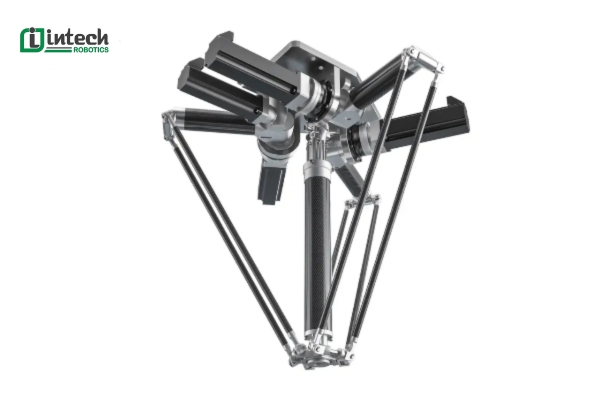
Delta robots offer outstanding benefits:
-
Rapid processing speed suited for high-speed production lines.
-
Compact design, saving installation space.
-
Stable performance, reducing downtime.
Palletizing Robot
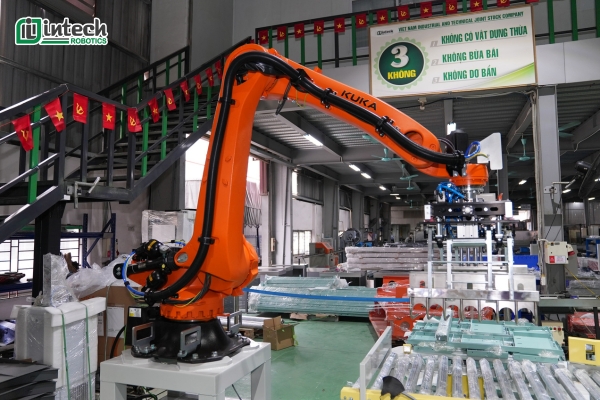
Palletizing robots are specialized for stacking light-duty goods onto pallets at the end of a production line. The robot can precisely lift and place cartons, sacks, or light boxes onto conveyors or pallets, ensuring goods are arranged scientifically to optimize storage space.
Advantages of palletizing robots include:
-
Stable, precise, and fast operation.
-
Reduced labor costs and stacking errors.
-
Increased efficiency in packaging and internal transport.
With the ability to stack goods neatly and correctly, palletizing robots are widely used in F&B, packaging, logistics, and automated warehouses.
Automated Guided Vehicle (AGV)
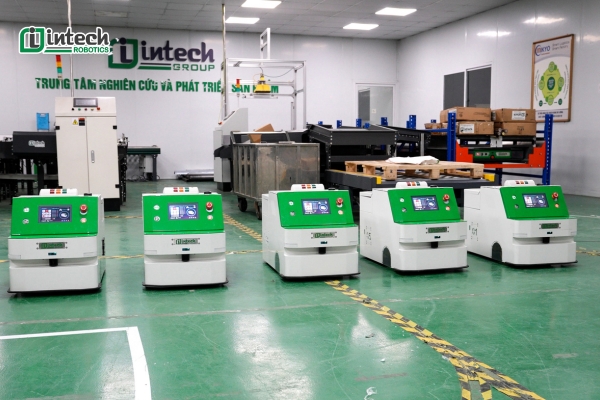
An AGV is an automated navigation vehicle capable of moving completely independently within a factory without a driver. AGVs use sensors, lasers, or magnetic fields to determine their position, ensuring precise and safe movement in production environments.
Due to their intelligent operation, AGVs help transport light goods, components, and raw materials between areas, automatically connecting production zones with warehouses. This is a flexible and sustainable transport solution for Smart Factory models.
Conveyor-Integrated Palletizing Robot
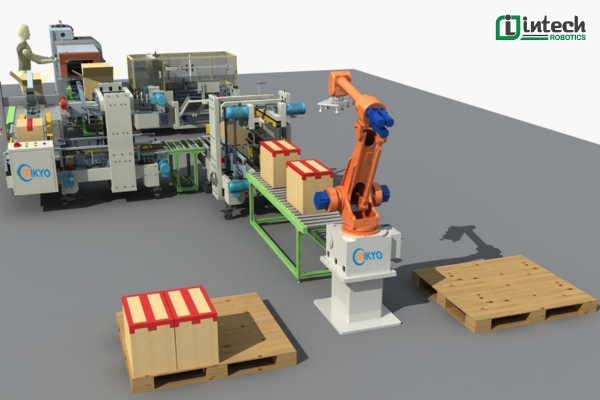
This system is a smart combination of a robotic arm and an automated conveyor, creating a rhythmic, continuous, and high-precision operational line.
-
Automatically picks goods from the conveyor and arranges them according to pre-set requirements, ensuring accurate and uniform placement.
-
Handles multiple products simultaneously, suitable for lines with high packaging speeds.
-
Operates stably and continuously 24/7, helping to reduce downtime and increase productivity.
-
Highly customizable and easy to reprogram when changing product designs, sizes, or specifications.
-
Easily integrates with sensor systems and AI cameras for faster and more accurate product recognition.
Conveyor-integrated palletizing robots are applied in various manufacturing industries, especially those with high volume and precision requirements like F&B and pharmaceutical plants.
Future Development Trends of Light-Duty Palletizing Robot Series
From simple mechanical systems, modern palletizing robots have evolved to help businesses operate flexibly, optimize costs, and achieve superior productivity increases.
Integration of Artificial Intelligence (AI) and Machine Learning
The new generation of palletizing robots is integrating AI and Machine Learning, allowing them to learn from real-world operational data to optimize the handling process. Consequently, robots can self-identify objects and adjust gripping force, rotation angles, and motion trajectories.
Internet of Things (IoT) Applications
IoT technology allows light-duty palletizing robots to connect directly to warehouse management systems (WMS, ERP) to synchronize real-time data. This helps businesses monitor location, performance, and goods status, enabling fast and accurate decision-making in supply chain management.
Energy-Saving Technologies
Robot manufacturers are focusing on developing energy-saving technologies, utilizing durable lithium-ion batteries that feature fast charging and continuous multi-hour operation.
Currently, light-duty palletizing robot series such as robotic arms, cobots, Delta robots, AGVs, or AMRs are being strongly applied in manufacturing plants, warehouses, and smart logistics centers. Each type offers unique advantages—from precise gripping and flexible movement to smart connectivity with overall management systems.
Therefore, businesses need to carefully evaluate actual needs, including goods volume, factory space, investment budget, and production goals, to select the most suitable palletizing robot solution. A correctly designed system will help businesses optimize performance, reduce operating costs, and enhance long-term competitiveness.
Conclusion
Light-duty palletizing robot series such as robotic arms, cobots, Delta robots, AGVs, or AMRs are being adopted extensively in manufacturing plants and smart logistics centers. Implementing these robots is not just an inevitable trend, but a strategic step helping businesses build more modern, sustainable, and flexible production foundations.
Contact Intech Robotics now for a consultation on the most optimized palletizing robot solution for your business. We are committed to accompanying you on the journey to building a smart factory in the Industry 4.0 era.
