

Predictions for 2026: What will happen next to the robotics industry?
20-03-2026 15
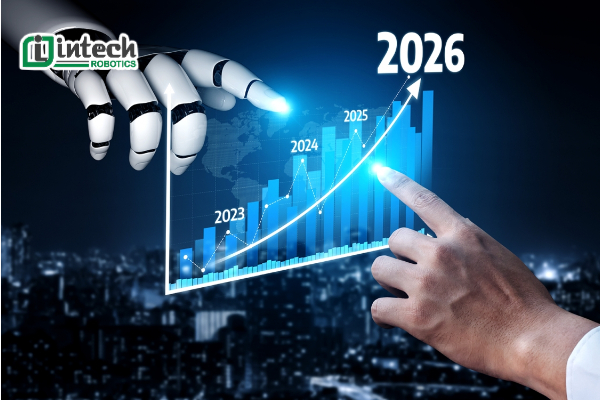
2026 marks a real shift in the industrial robotics industry, as businesses focus on application efficiency and economic value rather than simply chasing technology.
2025 marked a vibrant phase for the industrial robotics sector, as the world witnessed record venture capital investment, the rise of embodied artificial intelligence (embodied AI), and a wave of hardware innovations. Moving into 2026, the robotics industry is expected to undergo significant shifts as emerging technologies mature and businesses seek to optimize automation investment costs. From humanoid robots and Robot-as-a-Service (RaaS) to fully autonomous operation trends, everything is opening a new era for the robotics industry.
Join Intech Robotics as we review the predictions for 2026 and what will happen next in the robotics world.
Manufacturing Becomes the Main Driver of Automation
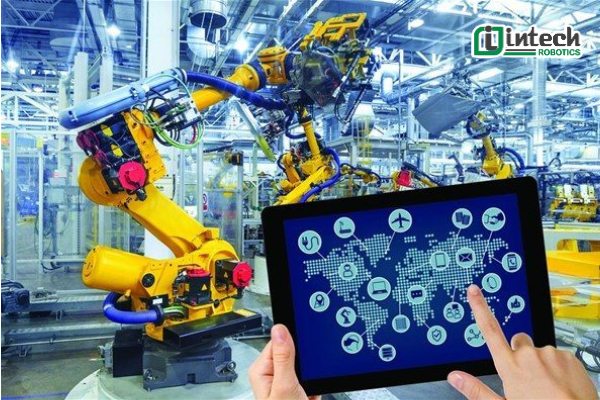
In 2026, the manufacturing sector is predicted to be the primary engine driving industrial robot automation. Faced with supply chain volatility, geopolitical tensions, and rising labor costs, nations like the United States are accelerating domestic manufacturing reshoring to maintain productivity and competitiveness.
Unlike the retail or warehousing sectors, which remain cautious in their investments, manufacturers are compelled to integrate industrial robots directly from the factory design phase. This contributes to increased output, reduced labor dependency, and ensures sustainable production efficiency.
The Robotics Supply Chain Begins to Decouple
Heading into 2026, geopolitics continues to shape the robotics industry. With approximately 90% of robot components still dependent on China, Western nations are accelerating the localization of production and building independent supply chains.
The decoupling between pro-US and pro-China robotics ecosystems is becoming increasingly apparent. Despite rising initial costs, this trend helps the robotics industry enhance autonomy and long-term resilience. Many businesses are opting for dual-sourcing models to mitigate risks while staying ahead of the domestic investment wave in the US and Europe.
Robot-as-a-Service (RaaS) Becomes a Leading Trend
By 2026, Robot-as-a-Service (RaaS) is projected to thrive as businesses search for flexible, low-cost, and scalable automation solutions. Instead of heavy capital expenditure (CapEx) on hardware, software, and maintenance, many companies are shifting to monthly robot leasing models, which reduces financial risk and shortens the Return on Investment (ROI) period.
RaaS is particularly popular among small manufacturing enterprises, 3PL logistics providers, and companies with limited budgets. This model enables smart factories to rapidly deploy robots in production, test real-world effectiveness, and easily adjust scale as demand fluctuates.
“Lights-out” Factories Begin Operation
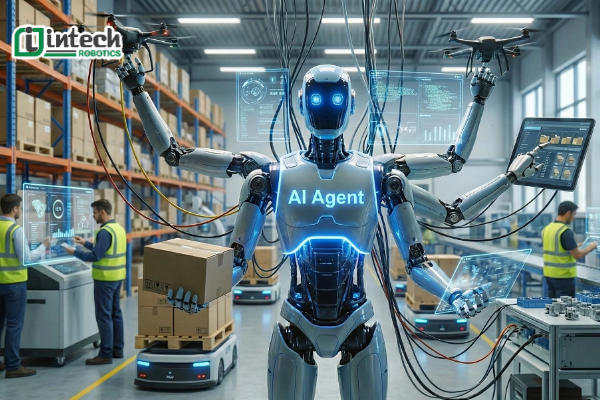
2026 also marks a significant step toward the goal of fully automated warehousing. While the stage of "unsupervised 24/7 operation" is still a way off, many businesses have begun implementing unmanned night shifts, where robots handle the entire process of picking, storing, and order staging before staff arrive for work.
This hybrid model between robots and humans increases productivity, reduces delivery times, and lays the foundation for fully autonomous distribution centers in the near future. It is a vital stepping stone for the "dark warehouse" trend—warehouses that operate automatically without the need for lighting.
Application of Humanoid Robots
Humanoid robots continue to capture global attention in 2026, though most projects remain at the stage of demonstration, testing, and data collection. Despite rapid technological progress, high production costs and inconsistent reliability mean that practical deployment still faces many barriers.
Experts predict that at least one high-profile humanoid robot startup may face difficulties or closure in the coming year. However, new ISO and ASTM safety standards are gradually maturing, paving the way for more practical applications in the years to follow.
The Rise of Micro-Fulfillment Centers (MFC)
E-commerce for groceries has seen strong post-pandemic growth, driving demand for fast delivery at low costs. To meet this, corporations like Amazon are restructuring their logistics models, focusing on small fulfillment centers located near residential areas.
Thanks to a new generation of robots with lower costs and higher efficiency, the automated Micro-Fulfillment Center (MFC) model is becoming more economical and feasible than ever before.
Conclusion
2026 is regarded as a pivotal milestone, marking the practical and sustainable transformation of the industrial robotics industry. Instead of just chasing tech trends, businesses will focus more on application efficiency, scalability, and economic value.
Enterprises that proactively invest early, experiment, and optimize their automation processes now will be the leaders of the transformation wave in 2026 and beyond. Intech Robotics is proud to partner with businesses on the journey of applying smart robotics toward a modern and sustainable production landscape.
